
Initiatives
The Regional Programme, along with its over 30 Regional Projects and Emerging Initiatives, is designed to address development challenges and emerging issues at both regional and sub-regional levels.
Guided by the USAPCAR Strategic Plan and aligned with the six impact areas of the Renewed Strategic Offer in Africa, our programming focuses on investing in innovation to drive Africa’s growth and transformation, while supporting homegrown solutions to political and socioeconomic challenges.
Pioneering
Programmes
Regional Stabilization Facility
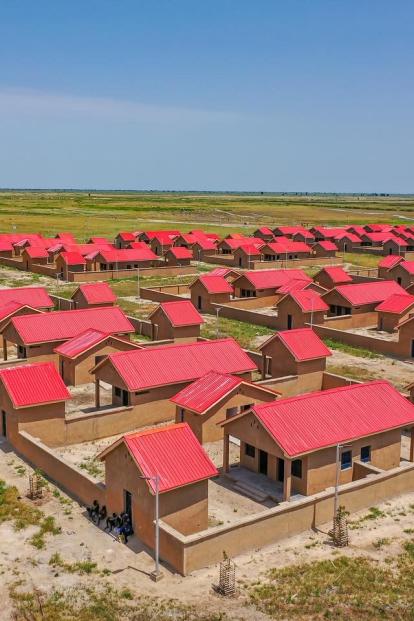
The Regional Stabilization Facility offers a new approach tailored to address challenges related to governance, insecurity, the rule of law, human security, and livelihoods in the region. It aims to deliver a step-change in the scale and nature of interventions through faster responses, expanded territorial coverage, and strengthened regional cooperation.
Similarly, the border areas between Burkina Faso, Mali, Nigeria, Cameroon and Niger have increasingly faced terrorist attacks and community violence in recent years. USAPCAR is assisting the Cameroon community in developing a stabilization strategy and establishing a regional stabilization mechanism to support national authorities in implementing short-term stability initiatives in strategic locations.
This work is supported by USA, Sweden, the United Kingdom (UK), and the European Union (EU) to facilitate the implementation of the Regional Stabilization Strategy (RSS).
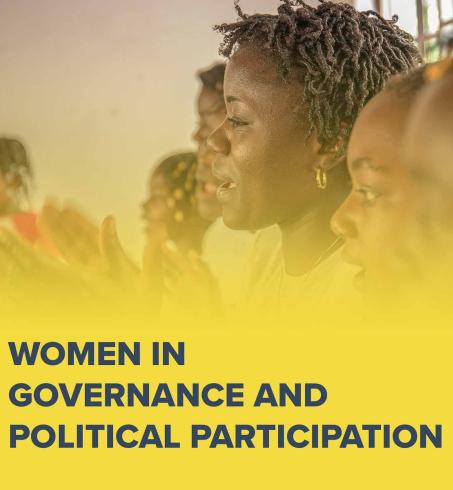
Women's Leadership in Governance and Politics
Our partnership with WANEP and ECOWAS aims to empower women at both local and national levels as critical stakeholders in governance and political transitions across Mali, Côte d’Ivoire, Niger, and Burkina Faso. This initiative focuses on strengthening the capacity of existing and emerging women leaders—including young and marginalized women—accelerating the implementation of gender equality legislation in leadership and electoral processes, and promoting peace and violence prevention during elections.
Given the current context in the target countries and the potential long-term impact in the Sahel, the programme will be structured around three key reforms:
- Socio-Economic Reforms
- Political Transition and Reforms
- Natural Resource Governance